

Maintaining a comfortable home environment relies heavily on a system that most people rarely think about until it stops working: the heating, ventilation, and air conditioning (HVAC) system. Homeowners often believe that as long as they schedule an occasional maintenance check, their system will run at peak performance indefinitely. However, efficiency is not just about the mechanical integrity of the equipment itself; it is profoundly influenced by daily household routines and subtle choices. Many well-intentioned individuals unconsciously practice habits that quietly force their climate control systems to work twice as hard, leading to spiked utility bills and premature equipment failure.
Understanding the hidden drains on your system’s performance requires looking past the thermostat and examining how you interact with your entire living space. From how you arrange your furniture to the way you manage your home’s natural light, seemingly minor behaviors create significant structural resistance against smooth airflow and temperature regulation. By identifying these counterproductive patterns, you can optimize your home’s energy consumption, prolong the lifespan of your expensive equipment, and ensure a more consistent indoor climate. This comprehensive guide uncovers the everyday actions that are quietly undermining your climate control system and offers concrete solutions to restore maximum operational performance.
Stop Blocking Registers With Furniture and Curtains
One of the most frequent structural bottlenecks in residential climate control happens when heavy furniture, area rugs, or long drapes are positioned directly over or in front of supply and return vents. When a sofa or a set of floor-length curtains blocks a register, the restricted airflow forces the system to run longer cycles to reach the target temperature set on the thermostat. This obstruction alters the static pressure within the ductwork, causing the blower motor to strain and consume significantly more electricity than necessary. Over time, this localized temperature imbalance can lead to short-cycling, where the unit turns on and off rapidly, drastically accelerating mechanical wear and tear.
To restore balanced airflow and protect your system from unnecessary stress, adopt a mindful approach to your interior layout. Rearranging your living space to keep a clear zone around all ventilation points ensures that air can circulate freely throughout the room.
-
Maintain a Clear Zone: Keep a minimum clearance of 6 to 12 inches around all supply and return grilles, ensuring no furniture or decor chokes the airflow.
-
Opt for Short Window Coverings: Use blinds, shades, or truncated drapes that terminate well above any baseboard or floor registers.
-
Utilize Vent Deflectors: If furniture placement is completely unchangeable due to room constraints, install clear plastic air deflectors to redirect the airflow out into the open room.
Once you clear these physical blockages, you will likely notice a swift improvement in how evenly your home heats or cools. If your system has been struggling under high static pressure for an extended period, it is wise to consult a reputable HVAC Service provider. Professional technicians can verify if the prolonged restriction caused underlying component strain and ensure the system’s internal pressure balances out properly. Taking care of these airflow pathways saves money immediately on your monthly energy expenditures while preventing costly emergency repairs down the road.
Clean Your Air Filters on a Strict Schedule
Neglecting the air filter is arguably the single most common behavior that destroys system efficiency and degrades indoor air quality. A filter choked with dust, pet dander, and microscopic debris acts as a literal wall against moving air, requiring the system to expend massive amounts of energy just to pull air through the system. This severe restriction can cause the evaporator coils to freeze over during the cooling season or trigger the high-limit switch to shut down a furnace to prevent dangerous overheating in the winter. Homeowners frequently wait until they notice a drop in performance or a strange smell before inspecting the filter, but by then, the efficiency loss has already cost them dearly on their utility statements.
Establishing a non-negotiable routine for filter inspection and replacement is essential for maintaining an unhindered thermal transfer process. Depending on the occupancy level of your home and whether you have furry companions, the ideal replacement window ranges between 30 and 90 days.
When selecting replacement filters, it is equally important not to over-correct by buying high-efficiency particulate air (HEPA) filters that are too restrictive for your residential unit’s fan capacity. Checking your system’s manual or asking certified HVAC companies for a specific Minimum Efficiency Reporting Value (MERV) recommendation ensures you strike the perfect balance between clean air and optimal airflow velocity. Consistently replacing this simple component keeps the internal machinery pristine, ensuring that every dollar spent on energy translates directly into actual comfort.
Manage Window Coverings to Block Solar Heat
Leaving window blinds and curtains wide open during the peak hours of a hot summer day transforms your home into a literal greenhouse, introducing massive solar heat gain that your cooling system must constantly fight. This continuous influx of radiant energy forces the air conditioner to run prolonged, exhaustive cycles to maintain a stable interior environment. Conversely, keeping window coverings tightly shut during bright winter days deprives your home of free, natural thermal energy that could naturally ease the burden on your heating system. Failing to actively manage your windows means you are ignoring the most volatile external variable affecting your home’s microclimate.
Developing the habit of opening and closing your drapes in sync with the sun’s daily path creates an effective, zero-cost thermal barrier for your living spaces. During warmer months, shielding the interior from direct afternoon sunlight prevents the indoor air temperature from spiking unexpectedly.
-
Deploy Reflective Backings: Utilize curtains or draperies lined with light-colored or reflective materials to bounce radiant solar heat away from the glass.
-
Embrace South-Facing Winter Sun: In the colder months, fully open southern and western window treatments in the morning to let natural sunlight warm the structural walls and floors.
-
Install Cellular Shades: Consider upgrading to honeycomb or cellular shades, which trap a layer of air within their built-in pockets to provide superior insulation year-round.
If your current windows are single-pane, warped, or constantly drafty, even the best curtain habits can only do so much to stop thermal transfer. In such cases, investing in a high-quality replacement window setup can completely transform your home’s envelope by utilizing low-emissivity glass and argon gas insulation to lock in your conditioned air. Minimizing the external workload placed on your system allows your heating and cooling equipment to cycle naturally and operate exactly within its most efficient design parameters.

Keep Interior Doors Open to Balance Airflow
Many people routinely close the doors to empty guest rooms, home offices, or storage spaces under the mistaken assumption that they are saving money by not heating or cooling unused zones. In reality, modern central climate systems are carefully engineered to treat the home as a singular, unified volume of air based on an open architectural floor plan. When you close interior doors, you cut off the supply air from its path back to the central return grille, creating high pressure inside the closed room and a vacuum in the rest of the house. This pressure imbalance forces conditioned air out through tiny structural cracks into the wall cavities or attic, while simultaneously pulling unconditioned, dusty outside air into the main living areas.
To prevent these invisible pressure imbalances from hijacking your energy efficiency, make it a household rule to leave interior doors open whenever possible. Maintaining an unobstructed loop between supply registers and return grilles allows air to circulate smoothly without forcing the blower fan to work against self-imposed resistance.
If privacy or noise control dictates that certain doors must remain firmly shut, look into installing specialized bypass grilles or under-door jump ducts to maintain a continuous path for air movement. For homes experiencing persistent uneven temperatures or strange whistling noises around door frames, reaching out to a reliable local AC company is an excellent next step. Their technicians can perform a static pressure test to balance your airflow perfectly, ensuring your central system operates as a cohesive, efficient loop rather than a collection of strained, isolated spaces.
Avoid Drastic Thermostat Over-Adjustments
Coming home to a freezing house in the winter or a sweltering room in the summer often prompts the habit of cranking the thermostat to an extreme temperature in hopes of forcing the system to work faster. This is a fundamental misunderstanding of how standard residential climate systems function; they operate at a single, consistent speed regardless of whether you adjust the target by two degrees or twenty. Cranking the cooling down to 60 degrees on a hot afternoon will not cool the room any faster, but it will guarantee the compressor runs past your actual comfort zone, wasting substantial amounts of electricity. These dramatic manual swings cause the system to overshoot targets, creating an inefficient cycle of extreme hot and cold peaks that stresses mechanical components.
The most effective way to eliminate these costly temperature spikes is to transition away from manual adjustments entirely and embrace a steady, incremental management strategy. Trusting the system to do its job at a realistic target setting prevents long, exhausting run cycles that rapidly inflate your power bills.
-
Invest in a Smart Thermostat: Program your system to gradually adjust the temperature 30 to 60 minutes before you arrive home, avoiding the need for sudden, manual overrides.
-
Adhere to the Eight-Degree Rule: Avoid shifting your thermostat more than 8 degrees Fahrenheit between your away periods and your occupancy periods to minimize recovery strain.
-
Utilize Ceiling Fans Correctly: Use fans to create a wind-chill effect while you are in the room, allowing you to set the thermostat a few degrees higher without sacrificing personal comfort.
If your system seems to take an extraordinarily long time to recover from minor, reasonable temperature adjustments, there may be an underlying issue with your equipment’s calibration or refrigerant charge. Contacting a professional local AC repair company to evaluate your system’s responsiveness can pinpoint hidden mechanical inefficiencies before they turn into complete system failures. Keeping your temperature commands stable and predictable allows your unit to run shorter, highly optimized cycles that preserve both your wallet and your indoor comfort.
Seal and Maintain Your Air Ducts
An incredibly common yet invisible habit that destroys HVAC efficiency is ignoring the physical condition of the ductwork winding through your attic, crawlspace, or basement. Many homeowners treat ductwork as permanent, indestructible plumbing, but standard duct joints can easily degrade, crack, or pull apart over the years of structural settling and thermal expansion. This means you are routinely paying to heat or cool uninhabited structural voids while your main living zones remain uncomfortable, forcing the system to run continuously to catch up.
Fixing these hidden energy drains requires a proactive approach to sealing and maintaining your home’s air distribution network. Visually inspecting accessible duct runs for disconnected sections or fallen insulation is an excellent starting point for any homeowner looking to take control of their energy consumption.
For a truly comprehensive solution, scheduling a professional air duct cleaning and sealing service can eliminate years of accumulated debris while pinpointing obscure leaks hidden deep within structural walls. Sealing these gaps with specialized mastic paste or heavy-duty foil tape ensures that every cubic foot of air your system conditions is delivered exactly where it is needed. Protecting the integrity of your ductwork not only lowers your monthly energy expenses but also significantly reduces the amount of dust, pollen, and outdoor allergens circulating through your indoor environment.
Use Exhaust Fans Sparingly
Kitchen hood fans and bathroom exhaust vents are fantastic tools for rapidly removing excess moisture, smoke, and cooking odors from your immediate living environment. However, a very common and costly habit is leaving these powerful ventilation fans running long after their primary job is fully completed. Because these fans work by pulling air out of your home and venting it directly outside, they create a powerful negative pressure zone inside your living space. This vacuum continuously draws an equal volume of unconditioned, humid, or freezing outdoor air inward through windows, doors, and electrical outlets, completely erasing the work your climate control system just performed.
Managing your exhaust fans with strict temporal boundaries prevents your conditioned indoor air from being needlessly pumped out into the neighborhood. Being mindful of how long these devices run prevents your central system from entering an endless loop of reconditioning compromised air.
-
Install Timer Switches: Replace standard toggle switches with mechanical or digital countdown timers that automatically shut the exhaust fan off after 15 or 20 minutes.
-
Rely on Moisture Sensors: Utilize smart bathroom switches that monitor humidity levels directly and activate or deactivate the fan based on actual ambient moisture.
-
Clean Fan Housing Annually: Keep the physical fan blades and external gravity dampers clear of lint and grease build-up to maximize their aerodynamic efficiency while running.
If your home constantly feels drafty or struggles to maintain a stable humidity level even when exhaust fans are off, your structural envelope might be overly leaky. Consulting a certified local furnace repairs expert can help clarify if your home’s overall air infiltration rate is causing your heating system to work overtime during the cold season. Balancing your targeted ventilation needs with a well-sealed home envelope preserves your expensive indoor air while keeping external climate extremes right where they belong—outside.
Avoid Over-Relying on Secondary Heating Sources
When a specific room feels chilly during the depths of winter, many people naturally reach for portable electric space heaters or fire up secondary heating elements to boost the temperature. While this seems like an efficient way to zone your comfort, over-relying on these independent units often confuses your central heating system’s primary thermostat. If a space heater warms the immediate area around the central controller, the main furnace may shut down entirely, leaving the rest of the house to drop in temperature. Furthermore, using electricity to generate localized resistance heat is vastly more expensive per British Thermal Unit (BTU) than relying on a properly maintained central natural gas or fuel oil configuration.
For homes that utilize oil-fired heating equipment, maintaining a steady, efficient burn relies heavily on the quality and consistency of your fuel supply chain. Ensuring you have a reliable relationship for automated oil delivery prevents your system from running completely dry, which can pull heavy sediment from the bottom of the storage tank straight into your fuel lines and burner nozzle.
Regularly checking your tank levels and coordinating timely fill-ups keeps your equipment running smoothly and cleanly through the coldest stretches of the year. If you find yourself consistently needing secondary heaters to supplement your home’s warmth, your primary furnace may be suffering from a clogged fuel filter or an out-of-spec burner. Rather than compensating with expensive portable electricity, having a professional technician inspect your heating oil burner assembly will restore the system’s core heating capacity. Addressing the root cause of your heating imbalances ensures your central system can efficiently warm your entire home evenly and safely.
Maintain the Clearance Around Outdoor Units
The outdoor condensing unit of your central air conditioner or heat pump is tasked with a massive thermodynamic job: expelling the concentrated heat gathered from inside your home out into the open air. To accomplish this, the large fan inside must pull massive volumes of air smoothly through the delicate aluminum fins lining the sides of the metal housing. A very common habit among homeowners is allowing decorative landscaping, climbing vines, firewood piles, or high weeds to encroach directly upon this outdoor equipment. When leaves, branches, or storage items crowd the compressor, the exhausted heat cannot disperse properly, causing the unit’s internal operating temperatures and pressures to skyrocket.
Protecting your outdoor unit from natural debris and physical blockages is an incredibly simple weekend chore that yields immediate efficiency dividends. Keeping the perimeter pristine ensures your system can shed thermal energy with minimal resistance.
-
Enforce a Two-Foot Buffer: Trim back all shrubs, bushes, and decorative plants to maintain a clear, unobstructed two-foot perimeter around all sides of the cabinet.
-
Clear Overhead Clearance: Prune low-hanging tree branches to maintain at least five feet of open vertical space above the fan discharge to prevent heat recirculation.
-
Hose Down the Coils Gently: Use a standard garden hose at a gentle angle once a month to wash away accumulated lawn clippings, cottonwood seeds, and dirt from the exterior fins.
If your outdoor unit has spent years neglected or buried under thick brush, the delicate aluminum fins may be severely impacted with deeply embedded grime or flattened by physical impacts. Enlisting a professional technician to perform deep chemical coil cleaning and fin straightening will instantly drop your system’s energy consumption. Taking care of this outdoor anchor point ensures your system can reject heat effortlessly, keeping your home exceptionally cool while preventing expensive compressor burnouts.
Schedule Consistent Professional Inspections
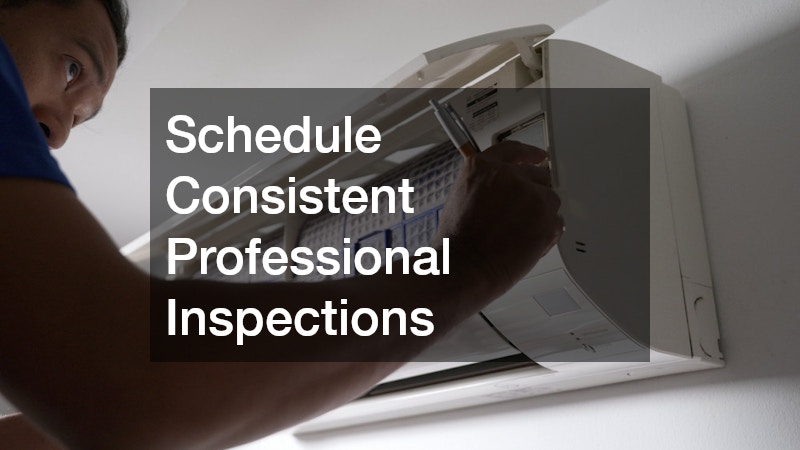
The most damaging habit a homeowner can develop regarding their HVAC system is practicing a strictly reactive mindset—only calling a professional technician when the system completely stops working. Waiting for a total mechanical breakdown means you are knowingly operating a system that is steadily declining in efficiency and accumulating hidden wear for months or even years. Tiny discrepancies like a slightly degraded capacitor, a minor refrigerant leak, or a loose electrical connection will not immediately shut a system down, but they will quietly drive up your monthly energy usage. By the time the system finally suffers a catastrophic failure, the cumulative cost of wasted energy often far exceeds the price of routine preventative care.
Embracing a proactive, preventative maintenance schedule is the definitive way to lock in peak operational efficiency and maximize the operational lifespan of your investment. Scheduling a professional tune-up twice a year—once in the spring for your cooling system and once in the autumn for your heating system—ensures everything is calibrated perfectly before extreme weather arrives.
During these comprehensive visits, a certified technician will check your thermostat calibration, lubricate all moving mechanical parts, measure electrical amp draw, and verify that all safety controls are fully operational. For households that enjoy the ambiance and warmth of traditional hearths alongside their central systems, combining this seasonal tune-up with specialized indoor fireplace services keeps your secondary exhaust flues venting safely and cleanly. Investing in regular, professional oversight eliminates unexpected performance drop-offs, optimizes your daily energy signature, and provides complete peace of mind that your home comfort infrastructure is prepared for any season.
Optimizing the efficiency of your HVAC system goes far past the mechanical quality of the equipment; it requires an active awareness of how your daily choices interact with your entire living space. By breaking counterproductive habits—such as blocking essential vents with furniture, neglecting basic air filter changes, and leaving windows exposed to harsh solar heat—you immediately lift a massive physical burden off your mechanical systems. These small, deliberate shifts in behavior naturally culminate in lower energy bills, more consistent indoor temperatures, and a substantial extension of your equipment’s operating lifespan.
Ultimately, achieving a truly efficient home is a continuous partnership between smart personal habits and professional technical care. Taking the time to keep outdoor units clear, managing interior doors mindfully, and addressing structural drafts ensures that your system doesn’t have to work overtime to keep you comfortable. When you complement these daily practices with consistent, professional maintenance, you transform your home into a highly optimized, comfortable, and energy-conscious environment for years to come.